



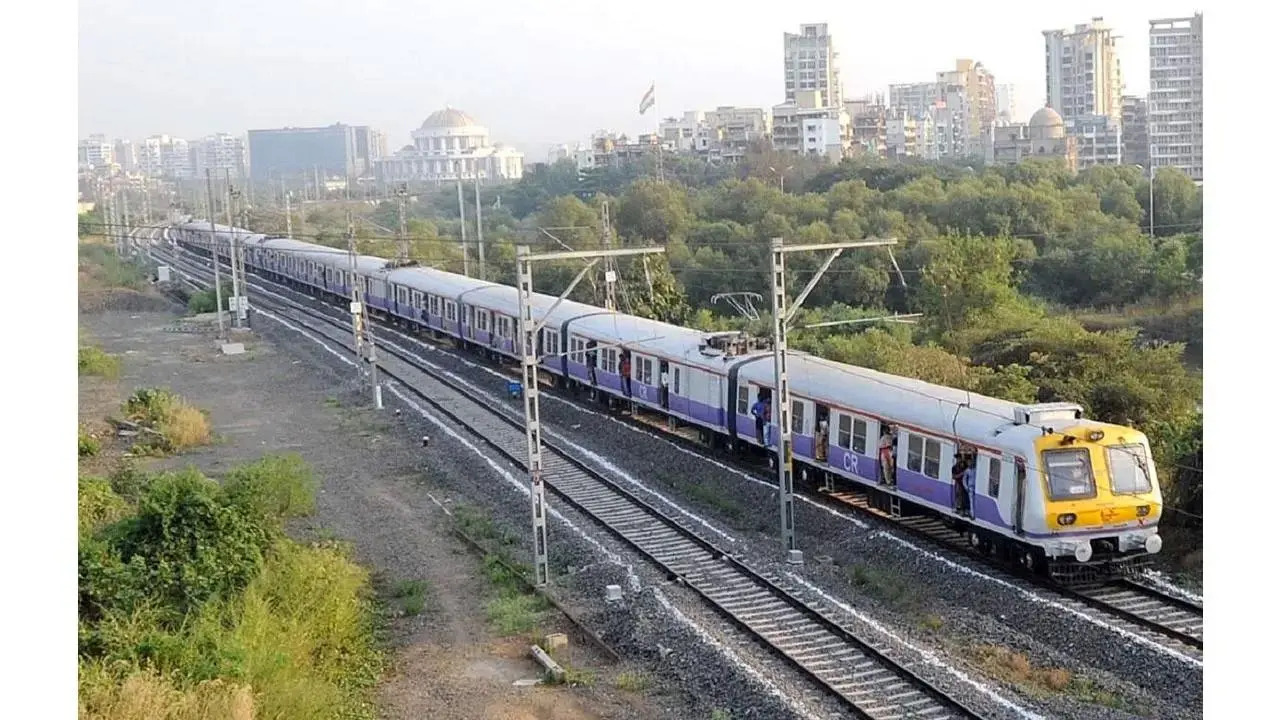
What the Karjat-Panvel Railway Line Actually Does to Property Value
Most people buying near Karjat are waiting for the same thing. They want the Panvel to Karjat suburban line to open before they commit. The reasoning feels sensible: see the trains running, confirm the commute works, then buy with confidence.
It is also the most expensive way to do it.
The hard part of property is that the value moves before the infrastructure does, not after. By the time the line is carrying passengers, the thing you were waiting to confirm is already priced in. You end up paying for certainty you could have bought far cheaper a year earlier, when it was merely highly likely instead of visibly done. We would rather you understood that mechanism than learned it the slow way.
What the line actually is
The Panvel to Karjat corridor is a roughly thirty kilometre suburban link built under the Mumbai Urban Transport Project, with five stations along the way at Panvel, Chikhale, Mohape, Chowk and Karjat. It is a dedicated double track, which matters, because it means Karjat is being folded into the Mumbai suburban network properly rather than being served by the occasional long-distance train.
As things stand it is in its final stretch, well past eighty percent complete, with an opening expected later this year. The date has moved before. It was targeted for late 2025, then early 2026, and the current expectation sits around the middle of the year. We will come back to why that slippage matters, because it cuts both ways.
When it opens, it does one specific thing that changes everything for Karjat: it removes time, not just distance. The Panvel to Karjat leg shortens by around half an hour, and Karjat connects into the same network that feeds Navi Mumbai, the airport node and beyond.
How infrastructure really moves value
Here is the part people get wrong. They imagine value as a switch that flips on the day the line opens. It is closer to a slope that the market climbs in stages, and the steepest part of that climb happens before the opening, not on it.
Think about how it actually plays out. When a project is just announced, prices barely react, because announcements in this country are cheap and everyone has been burned by one that never arrived. As land gets acquired and tunnels get dug, a little confidence creeps in and prices firm up. As completion crosses eighty and ninety percent and the opening becomes a question of when rather than if, the serious money moves, because the risk has largely been built out but the price has not fully caught up. Then the line opens, the last doubters arrive, and they pay the top of the range for the privilege of certainty.
The buyer who does best is almost never the one who waited for the trains. It is the one who read the construction progress correctly and bought while the outcome was clear but not yet obvious to everyone. Right now, with the corridor in its final phase, Karjat sits in exactly that window. The risk of the line simply not happening is small. The price has not yet absorbed it fully. That gap is the opportunity, and it is a closing one.
Why this matters more for Karjat than for the towns around it
A new line lifts every station along it, but not equally. The places that gain the most are the ones where the old objection was time, and where the price still reflects that old objection.
Karjat is the clearest case. Its lower entry price has always carried an unspoken asterisk, which was the commute. The line erases the asterisk while the price still assumes it is there. Compare that to a node like Panvel, which already enjoys strong connectivity and is priced as if it always will. Panvel does not have much of a gap left to close. Karjat does, and the line is what closes it. (We wrote separately about choosing between the two if that is the decision in front of you.)
The honest caveat about timing
We told you the slippage cuts both ways, so here is the other edge.
Government infrastructure runs late. This line has already moved its date more than once, and it would be dishonest to promise you a month. If your entire purchase depends on the trains running by a specific date, you are not really investing in Karjat, you are betting on a railway schedule, and that is a worse bet than the property itself.
The way to hold this sensibly is to buy on the fundamentals that are true regardless of the exact opening day. Karjat has the space, the surroundings and the price today. The line is close enough that the direction is not in serious doubt. If it opens in the middle of this year, you were early. If it slips to next year, you were still early, just by a little more. What you do not want is to keep waiting until the date is certain, because the date becoming certain is precisely the moment your discount disappears.
Where this leaves you
If you have been holding off until the line opens, it is worth questioning that instinct honestly. You are not waiting to reduce risk so much as waiting to pay more for less of it. The trains will confirm what the construction progress is already telling anyone willing to read it.
We are happy to walk you through where the corridor actually stands, what it does to the specific location of our project, and where the genuine risks sit, including the ones that do not flatter us. Being small enough that you can have that conversation with the people who built the project, rather than a sales script, is the part of this we are most comfortable putting our name to.